

c.1815-1840 Pierre-Victor Ledure? - French Empire Gilt Brass ormolu mantel clock
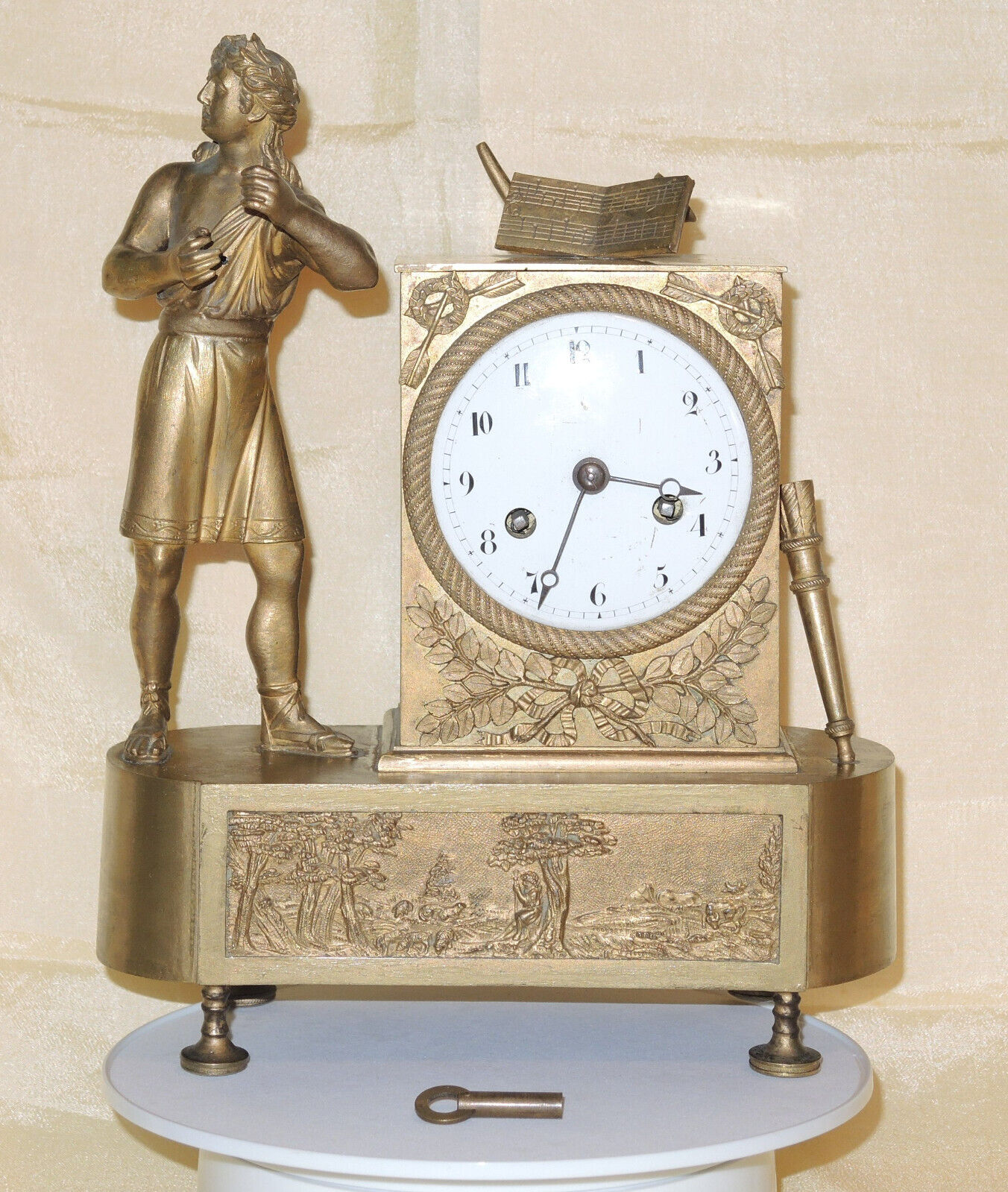
c.1815-1840 Pierre-Victor Ledure? - French Empire Gilt Brass ormolu mantel clock
SOLD $650.00 Sold: Feb 26, 2025 on eBayOriginal Listing Description
*****See my other auctions for more vintage jewelry & great historic items Antique c.1815-1840 Pierre-Victor Ledure? - French Empire Gilt Brass ormolu mantel clock ~ Allegory of Music ~ RARE!***SEE OUR OTHER LISTINGS FOR MORE AMAZING RARE PIECES*** Empire clocks in general and the largest and most notable examples in particular from the top bronziers, such as Pierre-Philippe Thomire, Claude Galle, André-Antoine Ravrio, Louis-Stanislas Lenoir-Ravrio, etc., are considered more than just clocks. They are works of art as well, sculptural études, where the balance in composition and the study of objects, animals and the human bodies forms and expressions are carefully and meticulously reflected in the bronze figures, achieving a high degree of realism, perfectionism and delicacy. These timekeepers were embellished with fine bronze figures of art, sciences, and high ideals allegories, gods, goddesses, muses, cupids, classical literary heroes and other allegorical or mythological compositions. Although there were a great diversity of case shapes, the most common and popular ones were the clocks with a rectangular or oblong base sustained by four (or more) legs of different forms and patterns. The pedestal front was normally decorated with either garlands, acanthus tendrils, acroterions, laurel wreaths, scrolls, flowers and other classical decorative motifs, or depicting finely chased mythological and allegoric scenes in relief as a frieze of a Greek-Roman temple. It is necessary to emphasize that unlike the clocks built in the 18th century, where the majority of them were signed, the authorship in many of the Empire ones remain anonymous, making it difficult to attribute one particular work to a certain bronze sculptor. To this must be added that it was a common practice among bronziers selling pieces to each other and even to copy or readapt others' designs. When signed, they usually bear the name on the dial and could be the bronzier's name as well as the retailer's name or the movement maker. These timepieces were devised to decorate the console tables or mantelpieces of a given hall or room in palaces, European and American mansions, houses, offices, etc. Today many of them are part of royal collections and can be seen in palaces, official residences, embassies, ministries, museums all over the world, etc. Gilt Brass Mantel Clock Circa 1815-1840, 10.5?H X 8?W X 3.25?D Heavy approx 7 lbs Antique French gilt brass mantel clock, circa 1815-40. This stepped base clock features the Allegory of Music with a musician figure holding a missing lute, topped with a horn & sheet music (with notes on pages), a torch leaning at side, and has the original time only movement with the key. The clock face is enamel & in nice condition. We have not tested the mechanism but it appears to all be there. Offering As-Is, untested. There are two holes in the clock face to turn the key (setting & winding) Has a beautiful sounding chime when dinged by hand. Much of the gold gilt remains with some surface wear. As prior mentioned the lute instrument is missing. There are two small holes on the top near the sheet music & horn that may have held something? (see 3rd pic) Just mentioning to cover all bases. There is a large highly detailed temple frieze relief scene on the front showing people & animals on a wooded hilly countryside. There are raised relief brass laurel wreaths arrows & ribbon bow tied garlands surrounding the enameled clock face. The antique French ormolu mantel clock is unmarked that we can see, as is sometimes the case, but research indicates it is an original Empire period possibly by Pierre-Victor Ledure, or involved his work (see research above), or by another top-name artisan bronzier of the period (see pics for research reference). Dimensions10 5?H X 8?W X 3.25?DWeight is about 7 lbs Please look at the photos because they are part of the description. If you need more pictures or information, please message me questions before bidding Please see my other listings for more Designer STERLING & other great vintage jewelry. FOR COMBINED SHIPPING ON MULTIPLE PURCHASES - PLEASE ADD TO CART & "REQUEST TOTAL FROM SELLER". Payment must be made within 3 days of purchase. Please see attached pics & make all inquiries prior to purchasing. SORRY, NO INTERNATIONAL OR CANADIAN BIDS. THANKS FOR LOOKING. (Condition: Pre-Owned)
Note: This item has been sold and is no longer available. This page serves as a historical price reference for clocks collectors and appraisers.
Original Listing Description
*****See my other auctions for more vintage jewelry & great historic items Antique c.1815-1840 Pierre-Victor Ledure? - French Empire Gilt Brass ormolu mantel clock ~ Allegory of Music ~ RARE!***SEE OUR OTHER LISTINGS FOR MORE AMAZING RARE PIECES*** Empire clocks in general and the largest and most notable examples in particular from the top bronziers, such as Pierre-Philippe Thomire, Claude Galle, André-Antoine Ravrio, Louis-Stanislas Lenoir-Ravrio, etc., are considered more than just clocks. They are works of art as well, sculptural études, where the balance in composition and the study of objects, animals and the human bodies forms and expressions are carefully and meticulously reflected in the bronze figures, achieving a high degree of realism, perfectionism and delicacy. These timekeepers were embellished with fine bronze figures of art, sciences, and high ideals allegories, gods, goddesses, muses, cupids, classical literary heroes and other allegorical or mythological compositions. Although there were a great diversity of case shapes, the most common and popular ones were the clocks with a rectangular or oblong base sustained by four (or more) legs of different forms and patterns. The pedestal front was normally decorated with either garlands, acanthus tendrils, acroterions, laurel wreaths, scrolls, flowers and other classical decorative motifs, or depicting finely chased mythological and allegoric scenes in relief as a frieze of a Greek-Roman temple. It is necessary to emphasize that unlike the clocks built in the 18th century, where the majority of them were signed, the authorship in many of the Empire ones remain anonymous, making it difficult to attribute one particular work to a certain bronze sculptor. To this must be added that it was a common practice among bronziers selling pieces to each other and even to copy or readapt others' designs. When signed, they usually bear the name on the dial and could be the bronzier's name as well as the retailer's name or the movement maker. These timepieces were devised to decorate the console tables or mantelpieces of a given hall or room in palaces, European and American mansions, houses, offices, etc. Today many of them are part of royal collections and can be seen in palaces, official residences, embassies, ministries, museums all over the world, etc. Gilt Brass Mantel Clock Circa 1815-1840, 10.5?H X 8?W X 3.25?D Heavy approx 7 lbs Antique French gilt brass mantel clock, circa 1815-40. This stepped base clock features the Allegory of Music with a musician figure holding a missing lute, topped with a horn & sheet music (with notes on pages), a torch leaning at side, and has the original time only movement with the key. The clock face is enamel & in nice condition. We have not tested the mechanism but it appears to all be there. Offering As-Is, untested. There are two holes in the clock face to turn the key (setting & winding) Has a beautiful sounding chime when dinged by hand. Much of the gold gilt remains with some surface wear. As prior mentioned the lute instrument is missing. There are two small holes on the top near the sheet music & horn that may have held something? (see 3rd pic) Just mentioning to cover all bases. There is a large highly detailed temple frieze relief scene on the front showing people & animals on a wooded hilly countryside. There are raised relief brass laurel wreaths arrows & ribbon bow tied garlands surrounding the enameled clock face. The antique French ormolu mantel clock is unmarked that we can see, as is sometimes the case, but research indicates it is an original Empire period possibly by Pierre-Victor Ledure, or involved his work (see research above), or by another top-name artisan bronzier of the period (see pics for research reference). Dimensions10 5?H X 8?W X 3.25?DWeight is about 7 lbs Please look at the photos because they are part of the description. If you need more pictures or information, please message me questions before bidding Please see my other listings for more Designer STERLING & other great vintage jewelry. FOR COMBINED SHIPPING ON MULTIPLE PURCHASES - PLEASE ADD TO CART & "REQUEST TOTAL FROM SELLER". Payment must be made within 3 days of purchase. Please see attached pics & make all inquiries prior to purchasing. SORRY, NO INTERNATIONAL OR CANADIAN BIDS. THANKS FOR LOOKING. (Condition: Pre-Owned)
Note: This item has been sold and is no longer available. This page serves as a historical price reference for clocks collectors and appraisers.